Driveway apron replacement
The standard job — tear out the cracked, sunken, or trip-hazard apron and pour a fresh one. Edge-matched to the existing drive and the city curb, sloped to drain away from the house and toward the gutter.
Service · Driveway Aprons
What we offer
The driveway apron is the section of slab between your private drive and the public street — and it’s where most concrete contractor work goes wrong. Wrong slope, wrong elevation, mismatched curb line, gaps you can roll a quarter through. We pour them flush, tied into your drive on the inside and the city curb on the outside, so the transition reads as one continuous pad.
The standard job — tear out the cracked, sunken, or trip-hazard apron and pour a fresh one. Edge-matched to the existing drive and the city curb, sloped to drain away from the house and toward the gutter.
When the drive is failing too, the apron and drive get poured together — one continuous slab at the seam, no patched-in edge later. The right move if you’re already doing a residential concrete driveway.
New driveway where there wasn’t one before? The apron pour is part of the curb-cut work — cutting the existing curb to grade and pouring the apron flush so vehicles can clear the lip without scraping.
Aprons that have settled, sunk below the curb, or pulled away from the drive can sometimes be repaired without full tear-out. We assess on site — if it’s reachable with mudjacking or partial replacement, we’ll quote that instead.
Aprons take heavy vehicle loads at low angles — trash truck, USPS, school bus, your own daily wear. We pour 6" thick with rebar or wire mesh on residential apron jobs so the slab handles the abuse without cracking.
The apron sits in the city right-of-way, which sometimes means a permit, an inspection, or both. We assess case by case and tell you straight at the estimate — we’ll handle the paperwork if it’s needed.
Apron details
An apron looks like a small slab. It isn’t. Get any of these four wrong and the work fails: water pools at the curb, the slab cracks at the seam, vehicles scrape the lip, or the city flags it. Get them right and it lasts the next 30 years.
The apron has to shed water off the drive and toward the gutter line — never back toward the house, never pooling at the curb. Pitch is set in the formwork before the pour, not corrected after.
The apron meets the city curb at exactly the right height. Too high and trash trucks scrape it. Too low and the curb forms a lip vehicles bottom out on. We level off the existing curb before pouring.
A clean expansion joint at the seam between apron and drive lets each slab move independently. Skip it and the seam cracks the first hard freeze. We tool it into the wet pour, not patched in later.
Aprons get broom-finished by default. The textured surface gives tire traction through Philly winters — smooth-trowel finishes on apron slabs are an ice rink waiting to happen.
Why Marcello
Most concrete contractors treat the apron as an afterthought to the drive. We don’t. Apron replacement is its own line of work in our shop — we pour them every week across Philadelphia.
The apron sits in city right-of-way. Permits, inspections, curb-cut paperwork — we’ve handled them all. We assess case by case at the estimate and walk you through what’s required.
The transition from apron to driveway has to read as one continuous slab — clean expansion joint, matched elevation, edges flush. Our apron pours don’t look "patched in."
Marcello and his father are on most jobs themselves. No project-manager handoff. The hands that quote the work are the hands that pour the apron.
Recent aprons
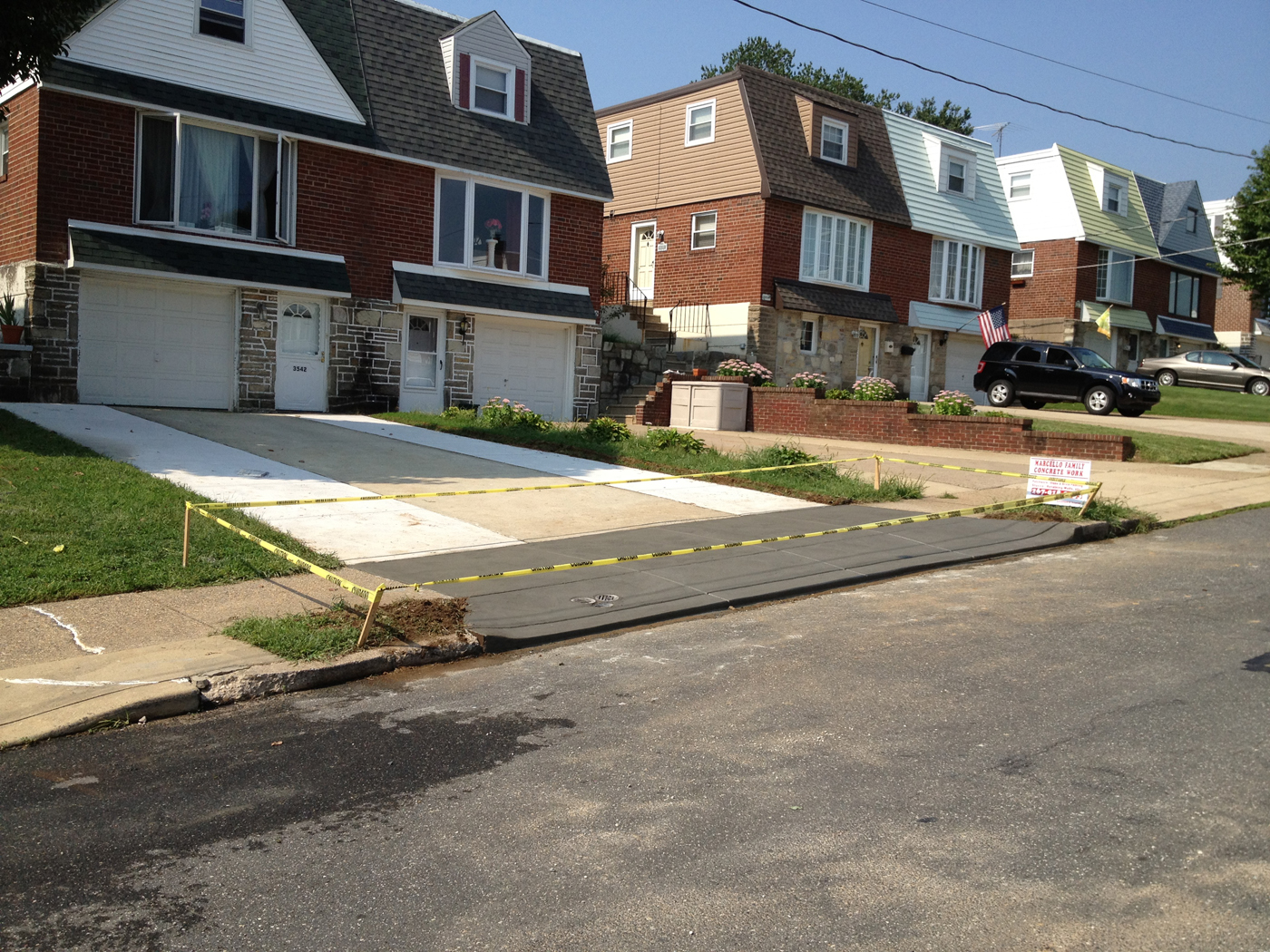
Featured · Driveway + apron
Apron tied flush to the sidewalk · Philadelphia
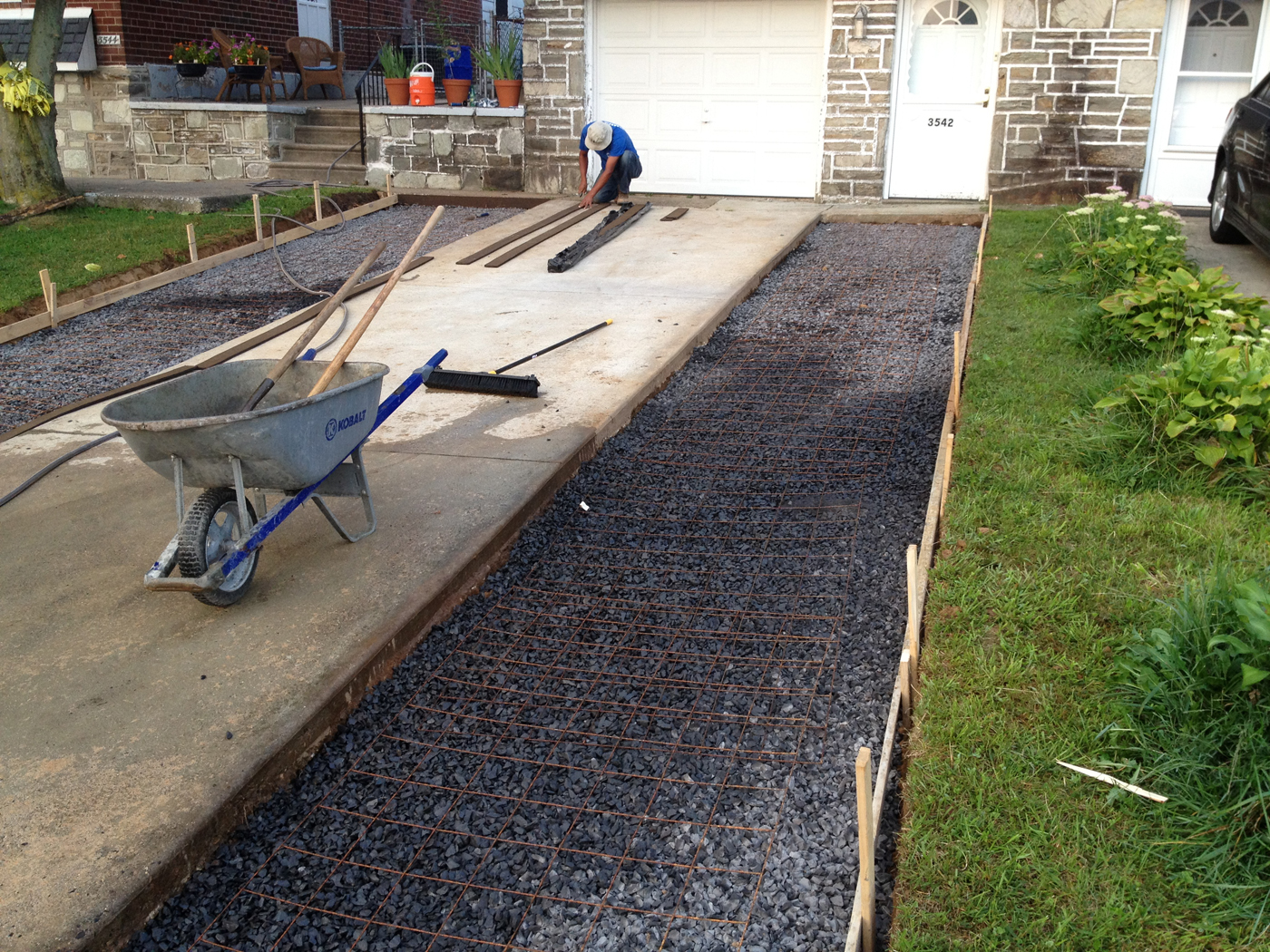
Apron tear-out
At the curb · Philadelphia
Forms set
Tied to the public walk · Philadelphia
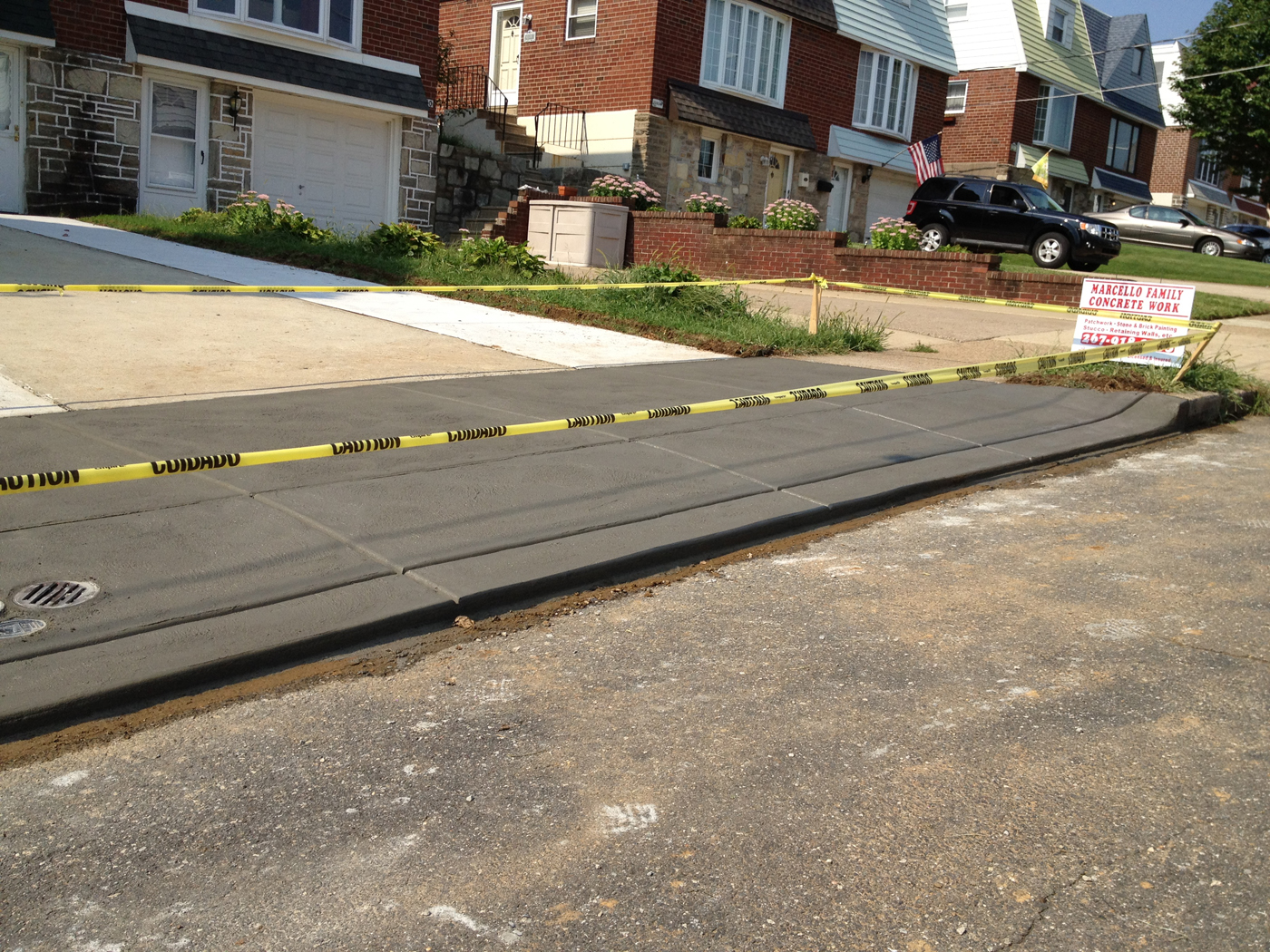
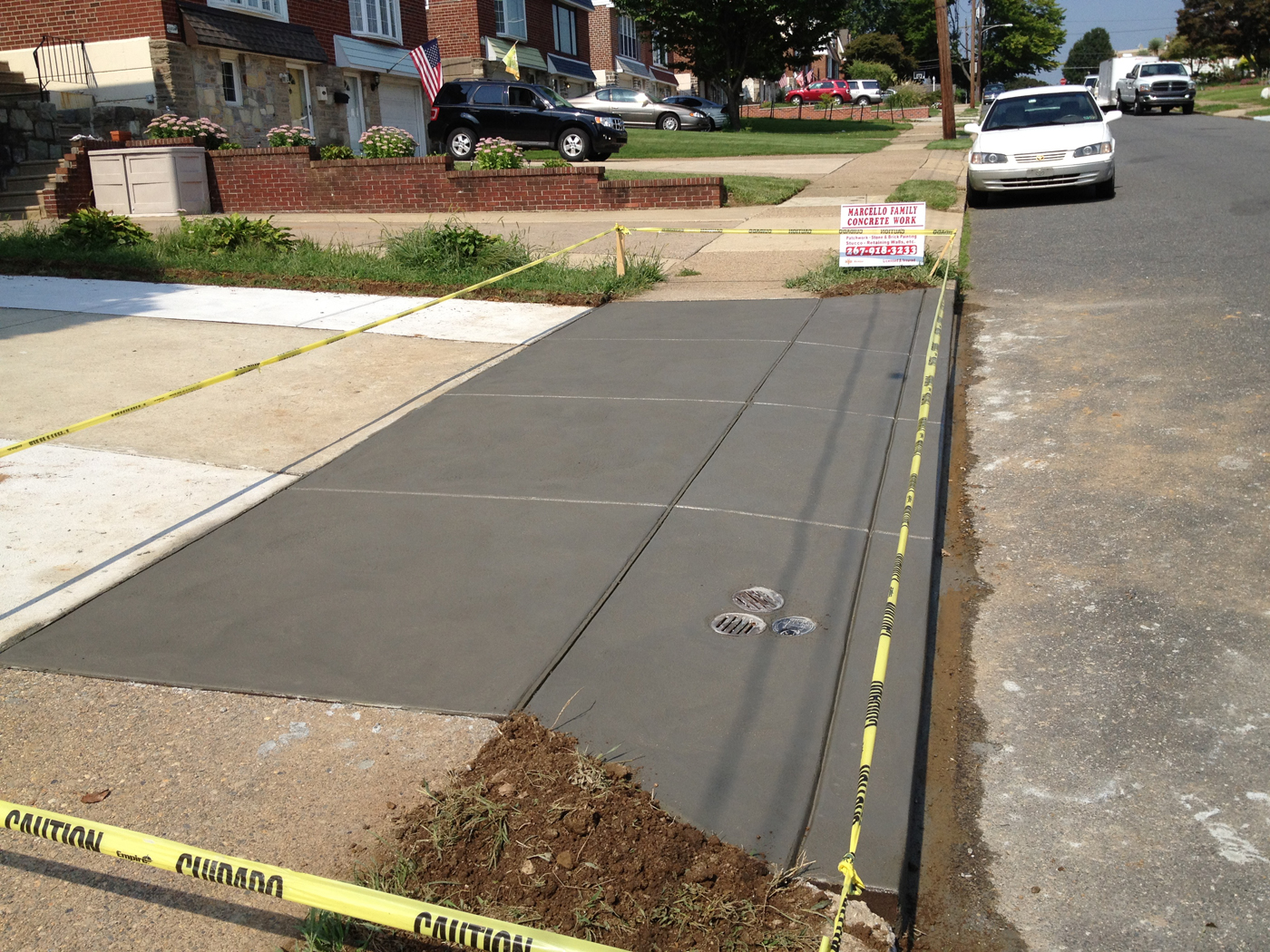
Fresh apron pour
Driveway apron replacement · Philadelphia
What to expect
No call center. No answering service. Most days it’s Marcello himself on the line. We’ll talk through the project and schedule a free walk-through.
We measure, talk through what you’re looking for, and walk the existing condition with you. You’ll get a written quote with a clear scope — no pushy sales.
We confirm the start window with you, line up materials and equipment, and walk you through what to move (cars, hose reels, anything along the work line) before the crew arrives.
Demo the old apron, level the curb line, set forms, pour, broom-finish, and clean every speck off your sidewalk and street before we leave. Most apron-only jobs wrap in a single day; apron + drive combos run 2–3 days on site.
FAQ
The apron is the section of concrete between your private driveway and the public street. On most Philadelphia row homes it’s the slab in front of the curb line, sometimes just a few feet deep. It carries every vehicle that enters or exits, including trash trucks and delivery vehicles, so it takes more abuse than the rest of the drive.
Most apron-only replacements are a single day on site: tear-out and base prep in the morning, pour and finish by afternoon. The fresh slab needs roughly 24–48 hours of foot-traffic cure and 5–7 days before vehicles roll over it.
If we’re pouring the apron and the driveway as one combo, it’s usually 2–3 days.
Sometimes — the apron sits in the city right-of-way, so depending on the scope (replacement vs. new curb cut, full vs. partial) the work can require a permit and an inspection. We assess case by case at the estimate.
If yours needs one, we can handle the paperwork or walk you through it if you’d prefer to file it yourself. Either way, you’ll know up front what’s required.
Just the apron, in most cases. The apron and the driveway are separate slabs joined at an expansion joint, and one can fail while the other holds up fine. We pour the new apron flush against the existing drive and tool a fresh expansion joint at the seam.
If the drive is also failing, we’ll quote both as a combo so the seam between them is one continuous pour rather than a patched edge.
Three usual reasons: the original pour was too thin (under 6″), there was no rebar or wire mesh under the slab, or the apron got vehicle traffic before it cured. Aprons take heavy axle loads at the curb-line lip — thin or unreinforced concrete cracks there first.
We pour aprons at 6″ with rebar or mesh as a residential standard. It’s why ours don’t crack at the curb.
Cost depends on apron size, whether the curb line needs work, access to the site, and whether a permit is required. We don’t publish square-foot prices — they’d be misleading.
The free on-site estimate gets you a written quote with a single number and a clear scope. No hidden line items.
Other services
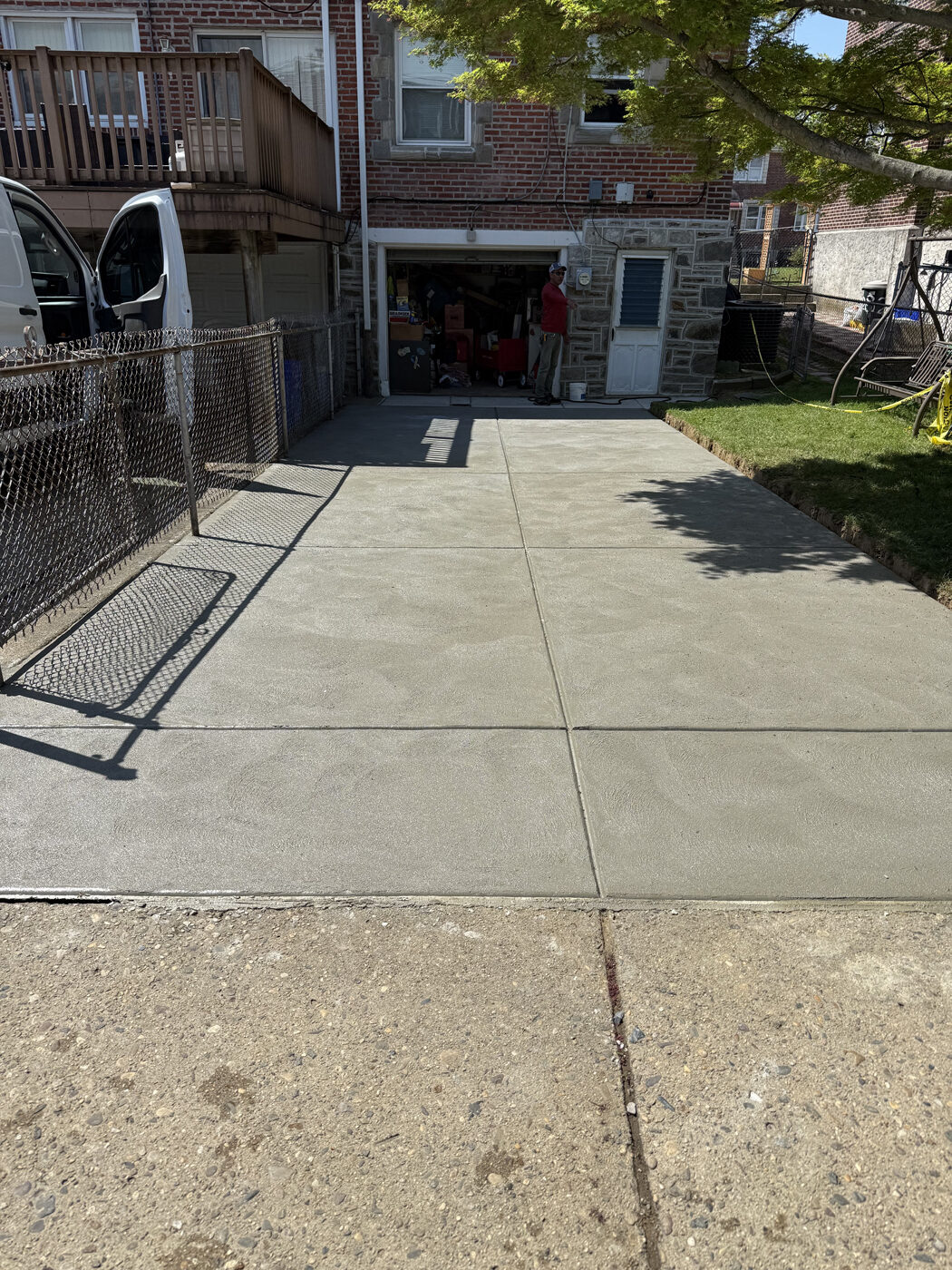
Closely related
New installs, full replacements, and parking pads. Often poured together with the apron in one combo job.
View Service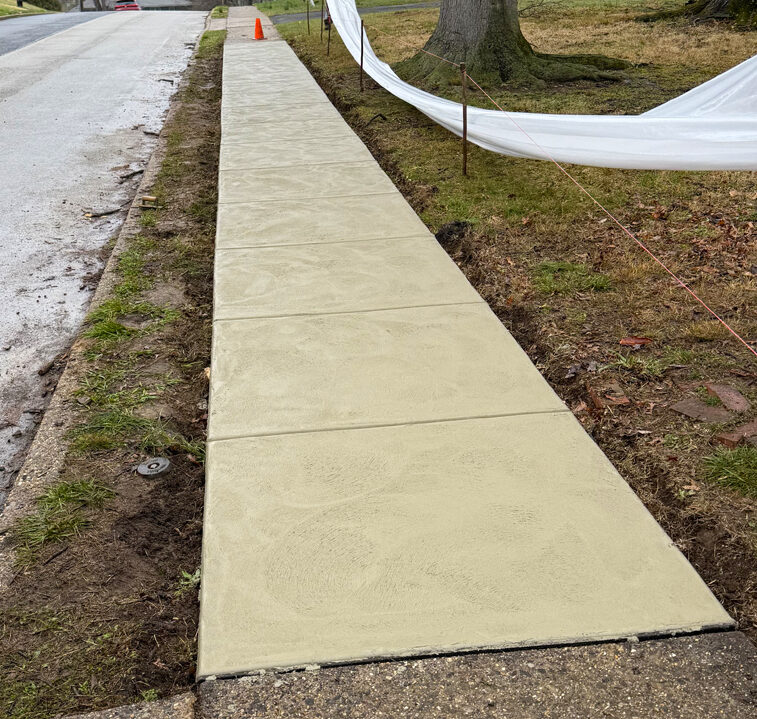
Block by block
Public-sidewalk repair, walkways, panel-by-panel replacement — often poured the same week as the apron.
View Service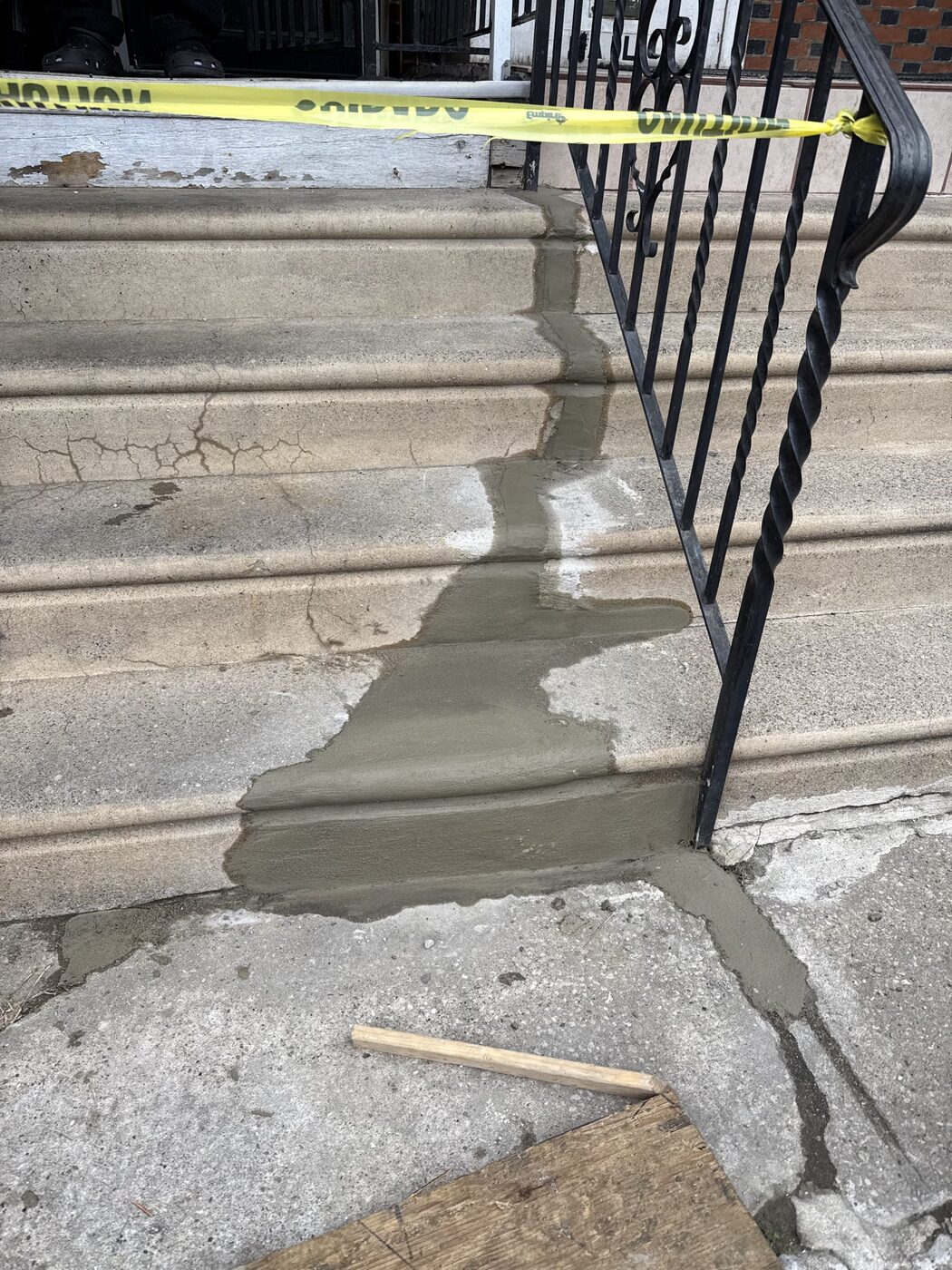
Repair, not replace
Cracks, spalling, settled corners. Honest repair-vs-replace assessment for residential concrete repair work.
View Service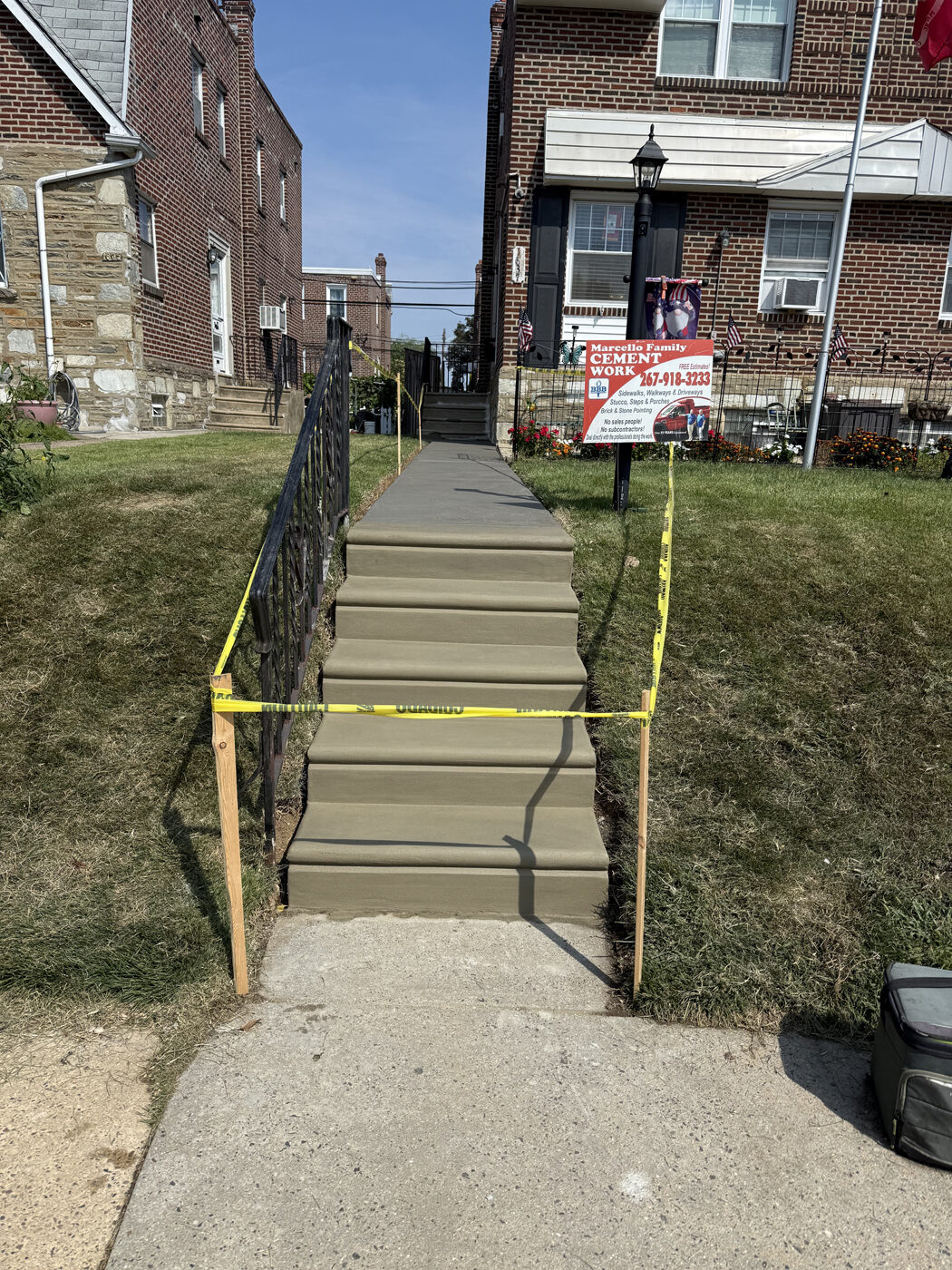
Front, side, basement
Bull-nose or flat-face. 3 to 14 risers. Railing prep included.
View ServiceAprons by location
Philadelphia & the surrounding counties.
Mayfair · Bustleton · Holmesburg · South Philly · Bucks · Montgomery · Delaware
From our neighbors
“I contracted with Marcello Family Concrete to replace my driveway, sidewalk, and steps from the driveway to the front door. The Marcello crew was AMAZING. They showed up on time, worked efficiently, and cleaned up as they went along. They’re true craftsmen who take tremendous pride in their work.”
“I had Marcello family Concrete come and do three of my pads out front. I could not be happier with the quality of work and the expertise of his workers. They were on time, did a great job, cleaned up everything when they were done. I would recommend this company to anybody.”
Get a free estimate
Free walk-through. Written quote with a clear scope. No call center, no sales script — Marcello will pick up the phone himself.