Concrete driveways in Philadelphia typically last 25–30 years when properly installed and maintained. Philadelphia’s freeze-thaw cycles, deicing salt exposure, and sub-base conditions are the biggest factors that shorten or extend that lifespan.
With proper installation by an experienced concrete contractor and routine maintenance, residential driveways across Philly often serve 30+ years before needing replacement.
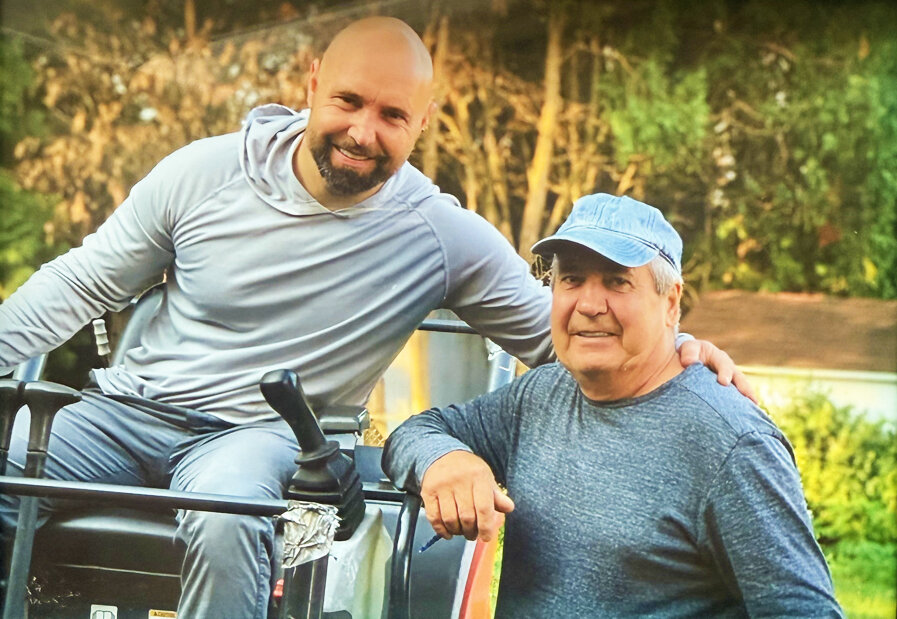
A new concrete driveway is one of the larger exterior investments most Philadelphia homeowners make, typically a several-thousand-dollar decision depending on size, access, and existing conditions. Knowing how long it should reasonably last informs the budget conversation, the maintenance plan, and the eventual repair-or-replace decision a decade or two later. Here’s the honest version, from a family that’s been pouring driveways across Philly since 1997.
What Determines How Long a Concrete Driveway Lasts?
Six factors decide whether your driveway hits the upper end of the 30-year range or fails early. None of them are mysterious, but they compound. Skip one and the others have to work harder.
Climate and weather
Philadelphia’s freeze-thaw cycle is brutal on concrete. Each winter, water that has seeped into hairline cracks expands as it freezes, opening those cracks wider season after season. Add deicing salt, which accelerates surface scaling, and you have the two biggest drivers of premature concrete failure in the city. Newer slabs handle a winter or two before the cumulative damage starts showing.
Quality of installation
A driveway only lasts as long as the work that went into it. A compacted sub-base, proper rebar or wire-mesh reinforcement, the right concrete mix for the climate, and clean finishing technique are the foundation of a 30-year slab. We see plenty of 12-year-old driveways failing because the contractor skipped the base prep, not because the concrete itself was bad. Our concrete driveways service page walks through the install process we follow.
Traffic and use
A residential driveway hosting two cars wears differently than one a contractor’s loaded F-350 sits on every night. Heavy vehicles parked in the same spot for years cause point-load wear that shows up as edge cracking and surface stress. The same is true for trash trucks rolling onto an unreinforced apron, one of the reasons we pour driveway aprons at 6″ with rebar by default.
Drainage and slope
Water is the single biggest enemy of concrete. A driveway sloped to drain off the edges (rather than pooling at the base of the slab) lasts significantly longer. The same goes for the apron at the curb, if water sits there in winter, that’s where damage starts. We set pitch in the formwork before pouring, not corrected after the fact.
Finish type
Broom finish, the most common in Philly, handles winter best. The texture sheds water faster and grips ice better. Mag finish is smoother and more refined-looking but more vulnerable to surface scaling under repeated salt exposure. Stamped concrete looks great but needs careful sealing and earlier crack repair to last; we don’t pour it ourselves and refer those jobs to a stamped-specialist.
Maintenance habits
A driveway that gets sealed every 3–5 years, has cracks chased and filled when they’re hairlines (not after they’ve widened), and avoids deicing salt where possible can outlast another driveway poured the same week. Most “30-year” Philly driveways got there through small consistent attention, not a single perfect pour.
Average Lifespan of Concrete Driveways in Philadelphia
The honest answer: 25–30 years is realistic. The national average for residential concrete driveways is 30–40 years, but Philly’s combination of freeze-thaw cycles and aggressive winter salting trims that. We’ve replaced plenty of driveways at the 22–25 year mark where the original concrete was just done, surface scaling beyond patch repair, joints failed, edges spalling.
We’ve also worked on driveways that are 40+ years old and still serving, usually because the original install was excellent and the homeowner has been religious about sealing and salt avoidance. Those are the exception, not the rule.
For planning purposes: budget for a concrete driveway replacement around year 25 if you bought a house with a driveway that was already 5–10 years old when you moved in. Most Philly homeowners go through one to two driveway replacements over the life of a row home.
For planning purposes: budget for a concrete driveway replacement around year 25. Most Philly homeowners go through one to two driveway replacements over the life of a row home.
Signs Your Driveway Is Reaching End of Life
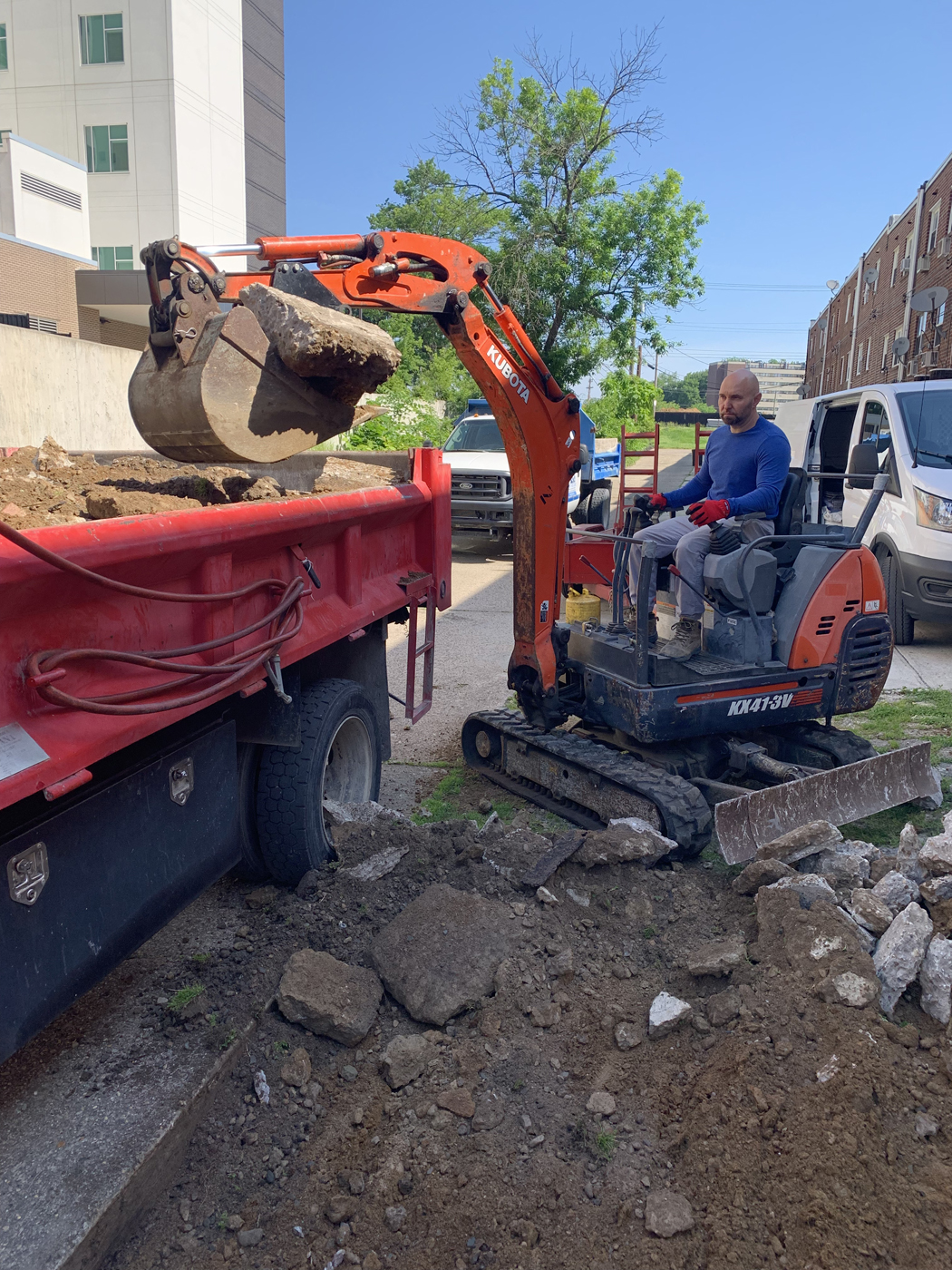
Some driveways tell you they’re near the end. Others fail without much warning. These are the visible signals that mean it’s time to start thinking about replacement, or at least getting an honest assessment.
- Wide, deep cracks. Hairline cracks are normal and patchable. Cracks you can fit a quarter into, that run across multiple panels, that are getting wider each year, those are structural. Once cracks are deep enough that water tracks under the slab, the freeze-thaw cycle accelerates failure dramatically.
- Sections that have settled or heaved. Look down the length of the driveway in profile. If sections have visibly dropped or risen relative to neighboring sections by more than a half-inch, the sub-base has failed. You can’t fix that from the surface.
- Surface scaling or spalling. The top quarter-inch of the concrete flaking off in patches is “scaling.” It happens from salt damage and freeze damage. Light scaling is cosmetic; aggressive scaling that exposes aggregate across most of the surface means the wearing surface is gone.
- Joints that have failed. Expansion joints should hold their shape and seal water out. When the joint material has deteriorated, popped out, or the slabs have shifted around the joint line, water is reaching the sub-base.
- Drainage issues. If you’re seeing standing water in the same spot after every rain, the slab has settled or heaved enough to disrupt the original slope. This will get worse, not better.
- Discoloration that won’t clean up. Patchy gray-brown surface staining that pressure washing doesn’t remove usually indicates aggregate exposure or efflorescence, both signs the slab’s surface is breaking down.
Repair vs. Replace: How to Make the Right Call
Most failing driveways don’t need full replacement. The honest assessment looks at four factors:
Age of the driveway. A 30-year-old slab with multiple of the above signs is past replacement-worthy. A 12-year-old slab with one cracked corner is a repair, full stop.
Extent of damage. One or two failing panels in an otherwise sound driveway is a partial replacement (cheaper). Failures across most of the slab, replacement.
Cost-benefit math. Repeated patches and crack repairs over a five-year window can equal the cost of a full replacement on a small driveway. If you’ve already paid for two repairs and you’re seeing more failure, replacement starts to make sense.
Sub-base condition. This is the hidden one. If the underlying sub-base has settled, no amount of surface repair will hold. We can usually tell during the assessment by tapping different sections of the slab, hollow spots indicate sub-base voids.
We tell customers honestly when repair is the better call. There’s no upside to selling a five-figure replacement on what’s really a low-four-figure repair job, we’d rather come back in 10 years for the real replacement and have built trust along the way. Our concrete patching & repairs page covers the repair side in more detail.
Need a driveway evaluation? Get a free on-site estimate from Marcello, we’ve poured driveways across Philadelphia since 1997. We’ll tell you straight whether you need a repair, a partial replacement, or a full pour.
How to Make a New Concrete Driveway Last Longer
If you’re investing in a new pour, these maintenance habits add real years to the slab. None of them are expensive; all of them require some consistency.
Annual visual inspection. Walk the driveway every spring after the snow’s gone. Look for new cracks, joint deterioration, surface scaling, and pooling spots. Catching problems early, when they’re inexpensive fixes, keeps them from becoming major repairs.
Seal every 3–5 years. A penetrating concrete sealer applied every few years is the single most cost-effective maintenance you can do. It prevents water and salt from reaching the slab’s pores. Pick a dry stretch of fall weather and budget a half-day. We can recommend a sealer that’s actually right for Philadelphia weather (most big-box options aren’t).
Avoid deicing salts where possible. Salt is the #1 reason concrete fails early in Philadelphia. Sand for traction works fine. If you must use ice melt, calcium chloride is less aggressive on concrete than rock salt, but neither is good for the slab. Hold off entirely on a fresh pour for the first 12 months.
Chase cracks when they’re hairlines. A polyurethane crack sealant on a thin crack stops water infiltration. The same crack ignored for three winters becomes a wide gap requiring a panel saw and partial replacement.
Watch the apron. The concrete apron at the curb takes the worst of street salting and traffic. Many driveway “failures” are actually apron failures, the apron can be replaced separately, often for a fraction of full driveway replacement cost. Our driveway apron page covers the specifics.
Frequently Asked Questions
How long should a concrete driveway last in Philadelphia?
A properly installed and maintained residential concrete driveway in Philadelphia typically lasts 25–30 years. The freeze-thaw cycle and deicing salt shorten lifespan compared to milder climates. With excellent installation and consistent maintenance, lifespans of 35–40 years are achievable.
Should I seal my concrete driveway?
Yes, sealing every 3–5 years is the single most cost-effective maintenance step you can take in Philadelphia. A penetrating sealer prevents water and salt from reaching the concrete’s pores, dramatically slowing the freeze-thaw damage that ends most driveway lifespans here. Pick a dry stretch of fall weather and apply per the manufacturer’s instructions.
Is it safe to use ice melt on concrete?
Most ice melts contain rock salt (sodium chloride), which is aggressive on concrete and accelerates surface scaling. Calcium chloride is less damaging but still not friendly to the slab. Sand for traction is the safest choice. If you must use ice melt, hold off until the concrete is at least 12 months old, and rinse it off the slab as soon as conditions allow.
What’s the difference between concrete driveway repair and replacement?
Repair addresses specific damage, crack chasing, surface patching, partial panel replacement. Replacement is the full tear-out and fresh pour. Most driveways under 20 years old benefit from repair; most over 25 years with multiple failure signs benefit from replacement. The honest call depends on damage extent, sub-base condition, and the cost-benefit math of repeated repairs.
How much does a new concrete driveway cost in Philadelphia?
Cost depends on size, access, sub-base condition, and whether the apron is included. We don’t publish square-foot pricing because it would be misleading, a small driveway on a tough access lot can run more than a large one on a clean lot. A free on-site estimate gets you a single number with a clear scope and no hidden line items.
Can I extend the life of an aging concrete driveway?
Yes, even older driveways respond well to maintenance. Sealing, crack repair, and avoiding deicing salts can add 5–10 years to a driveway already in mid-life. Once major signs (deep cracks, settled sections, widespread scaling) appear, extension becomes harder; replacement is usually the cheaper long-term call.
The Bottom Line
Concrete driveways in Philadelphia last 25–30 years with proper installation and consistent maintenance. The freeze-thaw cycles and aggressive winter salting that come with a Philly winter shorten that lifespan if the original install was rushed or maintenance got skipped. With good installation by an experienced contractor and the right small habits, sealing every few years, avoiding deicing salt, catching cracks early, your investment can serve reliably for three decades.
If you’re seeing signs your driveway is getting close to end-of-life, we’d be happy to walk it with you. No sales pressure, no scope inflation, just an honest assessment of what your slab actually needs. We pour residential concrete driveways across Philadelphia and the surrounding counties, with 4.8 stars across 187 verified reviews and an A+ BBB rating.
Need a real estimate on your project? Get a free on-site walk-through from Marcello, we’ve poured concrete across Philadelphia since 1997. We’ll tell you straight whether you need a repair, a partial replacement, or a full pour.